
iNaturalist is a citizen science project. It was started in 2008 as a Master’s final project for a group of students. In 2014, It merged with the California Academy of Sciences and in 2017, became a joint program with California Academy of Sciences and the National Geographic Society. iNaturalist is a platform that uses crowdsourcing for gathering observations and identifications. Citizens are able to record observations by photos, recordings and also evidences such as animal tracks or nests, time and locations are also added to the observations.The observations are classified by terms such as ‘casual,’ needs ID,’ or ‘research grade.’ Other members of the community add their own IDs to the observations to strengthen the classification. As important as the scientific data is, they state their primary goal of iNaturalist is to connect people to nature. Getting people with their phones out into nature to take pictures and record data is a step to getting people to connect to nature in a way that might get them to realize how much nature should be protected. They say their secondary goal is to generate scientifically valuable data, primarily for biodiversity.
I first spent time looking around the site to become more familiar with what the website is and how I could be come a part of a project.
The first tab I explored was “Explore” That took me to a wold map that gave an incredible overview of what this platform is doing. There is a worldwide map that shows the location of every observation that has been made. There are over 28 million observations of 245,000 different species and 809,000 people observing. The most common species is the Mallard duck and the Monarch butterfly is a close second. I wonder if this changes on seasons as those two species are currently migrating and may be skewing results.
Another thing that is interesting, a researcher can search for a particular species and get a map of where observations have been made.
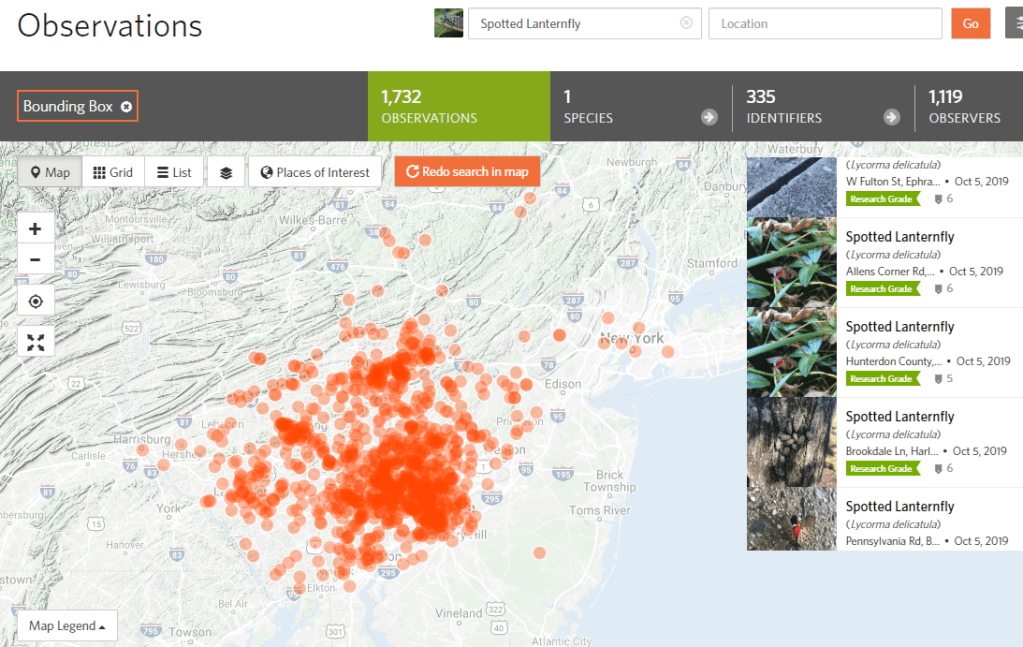
A specific area such as a town or a nature preserve can be studied as well.

This second use of the platform is very interesting to me and I would like to develop a way to make use of this in my work at a later date.
 Citizen Science Project